

Description
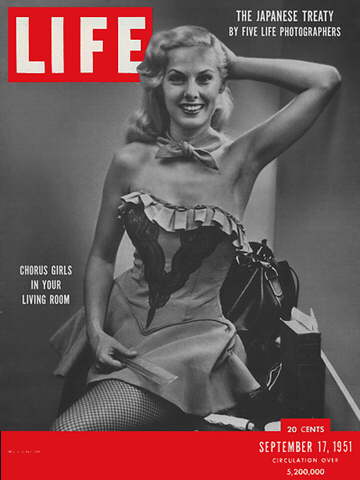
The September 17, 1951 issue of LIFE Magazine features television personality and model Dolores Rosedale, known professionally as Roxanne, on the cover. LIFE presented her as part of its feature on the growing world of television chorus girls, capturing a moment when television was rapidly becoming a major force in American entertainment. The issue reflects both the glamour and novelty of early TV, when performers who once might have worked primarily on stage or in film were beginning to reach millions of viewers in their own living rooms.
Beyond entertainment, this issue contains significant international and social coverage. LIFE reports on the Japanese peace treaty, documenting Japan’s formal return to the international community after World War II. Other major features examine Arab refugees, changing American television, the natural science of color, and emerging legal education. The issue also includes photography, sports, human-interest stories and LIFE’s characteristic mix of serious reporting and visual storytelling.
Inside This Issue
- Roxanne / Dolores Rosedale — the cover subject appears in LIFE’s feature on television chorus girls and the expanding world of early television entertainment.
- The Japanese Treaty — LIFE documents the historic peace settlement with Japan through the work of five LIFE photographers.
- The Forgotten Arab Refugees — James Bell examines the continuing refugee crisis in the Middle East.
- A Promising New Era Begins for Television — LIFE looks at television’s rapid growth and its expanding place in American homes.
- The Nature of Color — a major photographic feature by Andreas Feininger explores the science and visual beauty of color.
- TV Chorus Girls — LIFE examines the performers becoming familiar faces to America’s rapidly growing television audience.
- Student Lawyers Try a Real Case — a look at law students gaining practical courtroom experience.
- Tennis Gets Some New Champs — coverage of rising stars and new champions in competitive tennis.
- The Gray Lady Reaches 100 — Meyer Berger marks a major milestone for The New York Times.
- LIFE Goes on Location in Africa — LIFE closes the issue with a photographic feature from an African film location.
Original LIFE Magazines are authentic issues published between 1936 and 2000.
Pg… 28 THE WEEK’S EVENTS – JAPAN GETS A NEW KIND OF PEACE
Pg… 39 WOULD–BE SUICIDE PLUNGES OFF ROOF
Pg… 42 INDICTED POLICE CAPTAIN PROVES INDISPENSABLE
Pg… 49 THE “PELICAN’S” FINAL CRUISE
Pg… 58 SOAP BOX DERBY WINNERS ARE DINED
Pg… 38 FOOTBALL IS A FARCE PHOTOGRAPHIC ESSAYS
Pg… 103 THE NATURE OF COLOR PHOTOGRAPHED FOR LIFE BY ANDREAS FEININGER
Pg… 146 TV CHORUS GIRLS
Pg… 152 THE GRAY LADY REACHES 100, by MEYER BERGER
Pg… 91 THE FORGOTTEN ARAB REFUGEES, by JAMES BELL
Pg… 63 A PROMISING NEW ERA BEGINS FOR TELEVISION
Pg… 70 SAVED FROM THE SEWER
Pg… 73 RIVERA’S WATER WORKS
Pg… 81 HIT ‘EM AGAIN
Pg… 99 OSTRICH REVIVAL
Pg… 115 STUDENT LAWYERS TRY A REAL CASE
Pg… 121 A LESSON IN USE OF THE BROWNIE
Pg… 131 CHILDREN WITHOUT CLUTTER
Pg… 139 TENNIS GETS SOME NEW CHAMPS
Pg… 12 LETTERS TO THE EDITORS
Pg… 22 SPEAKING OF P!CTURES: 19–MONTH–OLD GIRL MEETS HER BABY BROTHER FOR FIRST TIME
Pg… 47 PEOPLE
Pg… 172 LIFE GOES ON LOCATION IN AFRICA : COVER Her real name is Dolores Rosedale, but the blond, blue–eyed girl on LIFE’S cover prefers to be known with simple austerity as Roxanne. Leaving her job as a Minneapolis dentist’s assistant three years ago, Roxanne came to New York, became a top Conover model and progressed naturally into television, which is now recruiting half the beautiful girls
