Marlon Brando – The Actor Who Changed Hollywood
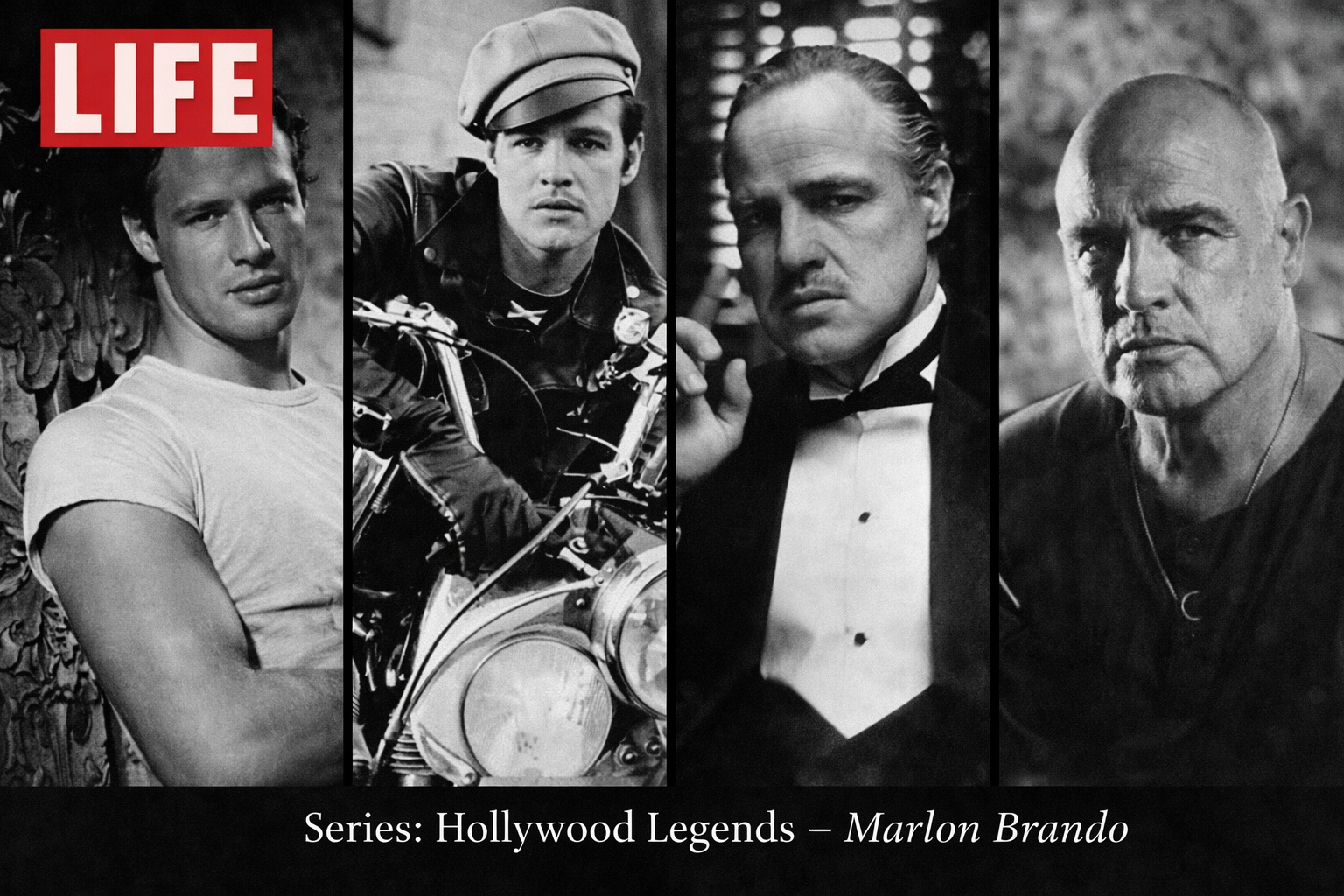
Ethan2026-05-20T08:55:27-04:00Marlon Brando did not simply become a movie star.
He changed the language of acting itself.
Before Brando, Hollywood performances were often polished, theatrical, and carefully controlled by the studio system. Actors projected confidence. Dialogue was delivered clearly. Emotion was presented rather than lived.
Brando shattered that formula.
His performances felt internal. Unpredictable. Dangerous. Human.
Audiences no longer felt like they were watching someone “act.” They felt like they were watching a real person think, hesitate, struggle, and react in real time.
That shift permanently altered modern cinema.
The Birth of Modern Acting
Brando emerged at the precise moment America itself was changing.
The certainty and idealism of the postwar 1940s were beginning to fade. American culture was becoming more psychologically complex, more conflicted, and more emotionally self-aware.
Brando embodied that transition perfectly.
He could appear powerful and wounded at the same time.
Tender yet threatening.
Confident yet emotionally exposed.
Unlike many stars before him, Brando did not project aspiration.
He projected humanity.
That authenticity electrified audiences and transformed an entire generation of actors that followed.
Modern naturalistic acting — from Robert De Niro and Al Pacino to Daniel Day-Lewis and Joaquin Phoenix — traces directly back to Brando’s influence.
Marlon Brando’s LIFE Magazine Covers
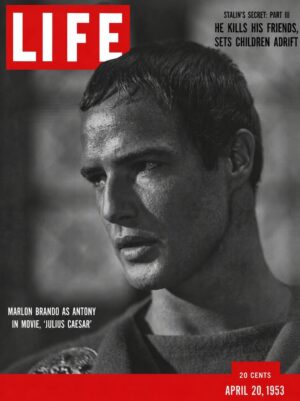
April 20, 1953 — Julius Caesar
Brando’s first LIFE cover appearance presented him as Mark Antony in Julius Caesar.
At the time, many critics doubted whether the young rebel associated with raw emotional performances could successfully handle Shakespearean drama.
Brando proved them wrong.
The performance demonstrated that classical acting and modern emotional realism could coexist — an important turning point in his career and in Hollywood itself.
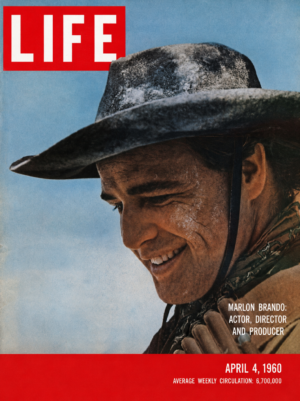
April 4, 1960 — One-Eyed Jacks
By 1960, Brando had evolved far beyond actor status.
LIFE photographed him during the production of One-Eyed Jacks, where he served as actor, director, and producer — an unusually ambitious role in an era still dominated by studio control.
The production became legendary for its chaos, perfectionism, and escalating costs.
But it also revealed Brando’s restless artistic ambition and refusal to conform to Hollywood expectations.
December 14, 1962 — Mutiny on the Bounty
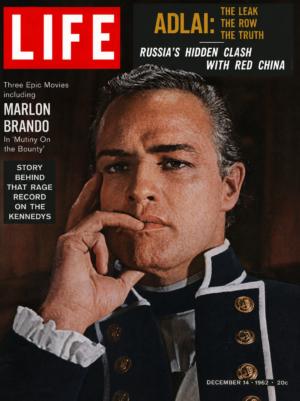
Brando’s appearance as Fletcher Christian in Mutiny on the Bounty became tied to one of the most infamous productions in Hollywood history.
The massive MGM epic was plagued by delays, budget overruns, production conflicts, and behind-the-scenes turmoil.
Yet the imagery from the film remains iconic.
LIFE documented Brando during this complicated period — capturing both the mythology and volatility that increasingly surrounded him.
March 10, 1972 — The Godfather
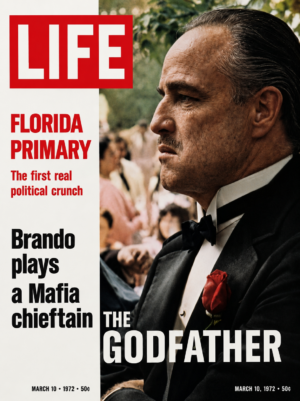
Brando’s final weekly LIFE cover became his most culturally significant.
As Don Vito Corleone in The Godfather, Brando disappeared completely into the role.
The performance revived his career, transformed gangster cinema, and became one of the most influential portrayals in film history.
The quiet voice. The restrained power. The emotional gravity.
Everything about the performance felt lived rather than performed.
More than fifty years later, it remains one of the defining images in American cinema.
More Than Stardom
Across these four covers, LIFE magazine documented far more than celebrity.
It documented reinvention.
From rebellious outsider… to artistic revolutionary… to cinematic myth.
Few actors permanently changed Hollywood itself.
Marlon Brando did.
Collector Note
The April 20, 1953 issue remains especially important because it captured Brando at the exact moment he proved he could transcend the “young rebel” image and command serious classical material.
The March 10, 1972 issue provides the extraordinary bookend — Brando fully transformed into Don Vito Corleone in The Godfather, one of the most iconic performances ever filmed.
Together, these LIFE issues capture nearly two decades of artistic evolution and Hollywood history.
Collect these and other original LIFE magazines at:
👉 https://www.OriginalLIFEmagazines.com
Original LIFE Magazines are authentic issues published between 1936 and 2000.
The perfect milestone gift.
Stories worth preserving – History you can hold.