

Description
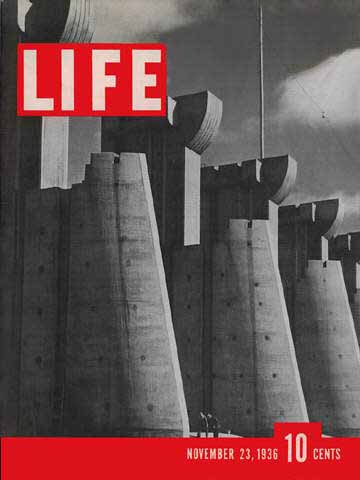
Original LIFE Magazine — November 23 1936
This is an authentic original issue of LIFE Magazine published November 23 1936 — a real piece of American history, carefully preserved and ready to give, collect, or display.
Cover Subject: Fort Peck Dam
Inside This Issue: Features LIFE’s historic first issue cover of Fort Peck Dam, along with the original news, photography, advertising, New Deal-era coverage, engineering history, culture, politics, and features from November 1936.
Completeness: Sales sample issue measuring approximately 6¾ inches × 8½ inches. Not a reproduction or modern reprint.
Perfect For: Birthday gifts, anniversary keepsakes, LIFE Magazine collectors, 1930s history readers, New Deal history collectors, photography collectors, and anyone who wants a meaningful gift from a specific date or year.
Original LIFE Magazines are authentic issues published between 1936 and 2000.
The Small Magazine That Launched a Giant: LIFE’s 1936 Sales Sample
In November 1936, LIFE magazine burst onto American newsstands and instantly changed journalism, photography, and popular culture. What’s less known is that one of the most important artifacts in LIFE history wasn’t sold to the public at all — and was small enough to fit in a briefcase.
It measured just 6¾ inches × 8½ inches, about ¼ inch thick.
And without it, LIFE’s meteoric rise might never have happened.
Before LIFE Was a Sure Thing
When Henry Luce launched LIFE, the idea itself was a gamble: a mass-circulation magazine driven primarily by photography rather than text. While TIME had proven that Americans would read the news in a new format, no one had proven they would buy images as the main event.
Luce didn’t just need readers.
He needed advertisers, agencies, and distributors to commit — early.
The Purpose of the Small-Format Sample
Alongside the now-famous November 23, 1936 issue, LIFE produced a reduced-size sales sample. This was not a “mini edition” for consumers and not a novelty. It was a tool.
Designed for LIFE’s advertising and distribution teams, the smaller version allowed sales representatives to:
-
Carry multiple copies easily
-
Leave samples behind with advertisers and agencies
-
Demonstrate layout, pacing, and ad adjacency
-
Prove that photojournalism could sell products as effectively as words
Every page in the sample was photographically reduced from the full-size issue — not redesigned — preserving the magazine’s rhythm and visual logic.
Why Size Mattered
The reduced dimensions served a very practical purpose.
At full size, LIFE felt cinematic.
At small size, LIFE became persuasive.
The sample showed that:
-
The storytelling worked even when scaled down
-
Ads retained their prominence next to images
-
The design held together under scrutiny, not just spectacle
It wasn’t meant to impress emotionally.
It was meant to close deals.
Not Meant to Be Saved
Unlike the public issue, these small-format samples were:
-
Never sold
-
Rarely cataloged
-
Often discarded after meetings
Salesmen scribbled notes in them. Agencies tossed them out. Libraries ignored them. Few people thought they were holding history.
Ironically, that’s why fewer survive today than the full-size first issue.
Why Collectors Care Now
To collectors and historians, the 1936 small-format LIFE sample represents something rare: the business mechanics of a cultural revolution.
It’s the moment when:
-
Visual journalism became commercially viable
-
Photography proved it could drive mass advertising
-
A radical idea became a scalable enterprise
This humble, portable magazine helped turn LIFE from a bold concept into a national phenomenon.
A Quiet Artifact with an Outsized Legacy
The November 23, 1936 LIFE issue changed how America saw the world.
The small-format sales sample explains how it happened.
It’s a reminder that revolutions don’t begin on newsstands.
They begin in conference rooms — with something tangible in hand.
Sometimes, history isn’t large and loud.
Sometimes, it’s 6¾ inches × 8½ inches, quietly convincing the future.
