

Seeking the Magic Mushroom
By Gordon Wasson
The magic of mushrooms, or more specifically, Psilocybe mexicana, has long been known to the native people of southern Mexico. But it wasn’t until 1955 that a Western scientist, Gordon Wasson, first openly discussed these fascinating hallucinogenic fungi with the world.
In a remarkable adventure, Wasson and his wife, Valentina, traveled to the remote Sierra Mazateca, where they participated in an ancient Indian ceremony involving the sacred “magic mushroom.” This event, which was the culmination of Wasson’s deep immersion into the rituals and practices of the Mazatec Indians, marked a turning point in Western understanding of mind-altering substances and their potential for expanding consciousness.
Wasson, a banker by profession, was initially skeptical but was soon caught up in the ritualistic significance of the mushrooms and the ceremony. The vision-producing fungi, central to the Mazatec ceremonies, have profound spiritual and cultural meanings, as Wasson discovered firsthand.
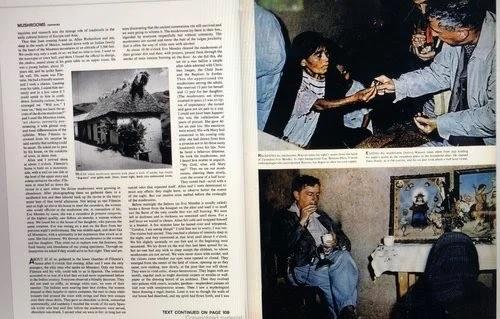
A Strange, Solemn Rite and Wonders in the DarkThe ceremony was held in a dimly lit room, where the group of Indians gathered around the central figure, the curandera (healer). They used the mushrooms as part of a sacred ritual, which Wasson later described as a solemn, almost mystical event.
As they consumed the mushrooms, the participants began to experience profound changes in their perception. Wasson himself, after consuming the mushrooms, felt an overwhelming sense of connection to the universe, as though he had transcended ordinary consciousness. His experiences were marked by vivid visions of colors and shapes that seemed to merge with the fabric of the world around him.
This ritual was not just a psychological event but a spiritual journey into another realm of existence. The Mazatec people believed that the mushrooms enabled them to communicate with spirits and receive guidance.
More Mushrooms and Their Healing PowerThe magic mushrooms were not only believed to be a means of connecting with spirits but also had healing properties, according to the Mazatec people. They used the mushrooms in a variety of ritualistic contexts, with the primary goal being to facilitate spiritual insight and healing.
As Wasson continued to explore this profound experience, he learned that the mushrooms were often consumed in a specific, ritualistic manner, accompanied by prayers and invocations. The mushrooms’ effects were seen as an essential part of healing for both physical and mental ailments.
In addition to their use in spiritual ceremonies, the mushrooms were also used to treat various health conditions. Wasson observed how the Mazatec curanderos used the mushrooms to cure fevers and ailments, demonstrating their faith in the fungi’s powers.
Rare Vision-Giving Fungi Shown for the First TimeIn addition to recounting his personal experiences with the magic mushrooms, Wasson also presented to the world for the first time detailed images of the mushrooms themselves, illustrating their unique and otherworldly qualities. These mushrooms, scientifically known as Psilocybe, are distinguished by their characteristic blue-green color and their potent psychoactive properties, which were previously known only to the indigenous people of the region.
The photographs displayed in the article, taken by Wasson himself, depict various species of the Psilocybe mushroom. These mushrooms had never been photographed or cataloged by Western science until Wasson’s expedition. His research and documentation helped bring these once-hidden mushrooms into the spotlight, offering new insights into their role in indigenous rituals and their potential uses in modern psychology and medicine.
The images also reveal the diverse forms of mushrooms that vary in size, shape, and color. This was the first time such detailed depictions had been available to the public, marking an important moment in the history of ethnobotany.
LIFE Magazine – May 13, 1957