


Jean Arthur: The Mystery Woman of Classic Hollywood
Before Jean Arthur became one of the most beloved actresses of classic Hollywood, she nearly disappeared into the machinery of the studio system. She worked in silent films. She struggled through forgettable early roles. She was overlooked, reshaped, and underestimated. Then sound arrived. Suddenly, the quality that made her different became the quality that made her unforgettable. Her voice. High. Cracked. Warm. Nervous. Comic and wounded at the same time. Jean Arthur did not sound like anyone else in Hollywood. She did not feel like anyone else, either. For the companion Substack essay on Jean Arthur, read the full piece here: https://originallifemagazines.substack.com/p/series-hollywood-legends-jean-arthur?r=1wuibn

Starring Gary Cooper and Jean Arthur, Mr. Deeds Goes to Town became one of Frank Capra’s best-known romantic comedies. Arthur plays reporter Louise “Babe” Bennett, who initially approaches Longfellow Deeds as a story rather than a person. Her performance gives the film its emotional balance. She is worldly enough to doubt goodness but honest enough to recognize it when it appears.

Opposite James Stewart and a large ensemble cast, Arthur helped anchor one of Capra’s warmest visions of American life. The film celebrates family, eccentricity, generosity, and the idea that personal happiness matters more than wealth or social position. Its sprawling collection of characters needed an emotional center. Jean Arthur provided one.
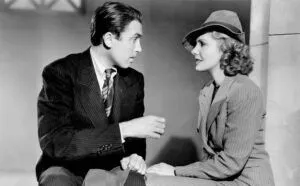
Arthur delivered one of her defining performances as Clarissa Saunders in Mr. Smith Goes to Washington. Saunders begins the story weary, sarcastic, politically experienced, and deeply disillusioned. She understands Washington far better than the idealistic Jefferson Smith, played by James Stewart. But rather than simply mocking his innocence, she eventually helps him fight. Not because she is naïve. Because she has seen the political system clearly and still chooses to believe that something better might be possible.

Jean Arthur received an Academy Award nomination for Best Actress for her performance in The More the Merrier. Set during a wartime housing shortage in Washington, D.C., the film pairs Arthur with Joel McCrea and Charles Coburn. It showcases her extraordinary gift for romantic embarrassment, social awkwardness, physical comedy, and emotional precision. Few performers could make discomfort so funny—or so revealing.

Jean Arthur’s final film role was a dramatic departure from the romantic comedies for which she was best known. As Marian Starrett in George Stevens’ classic Western Shane, Arthur brought restraint, longing, strength, and quiet moral gravity to the screen. It was a fitting final movie performance. Not loud. Not showy. But deeply felt. Across these films, Jean Arthur became more than a great comic actress. She became one of Hollywood’s finest interpreters of conscience. The woman who knew better. The woman who had been disappointed. The woman who still hoped.
Jean Arthur’s Unmistakable Screen Presence
Jean Arthur became one of the defining faces and voices of American comedy during the 1930s and 1940s. But her performances were never simply comic. She brought something more delicate to the screen: a kind of moral intelligence. Beneath her quick timing and nervous wit was often a woman trying to decide what remained decent in an indecent world. That quality made Arthur especially well suited to the films of director Frank Capra. In Mr. Deeds Goes to Town, You Can’t Take It with You, and Mr. Smith Goes to Washington, she became the ideal Capra heroine: skeptical, sharp, disappointed by the world, but not yet defeated by it. She could portray cynicism without cruelty. She could portray innocence without weakness. Most importantly, she could make goodness feel intelligent. That was Jean Arthur’s gift.The Everyday Heroine of Classic Hollywood
Hollywood in the 1930s celebrated glamour. Jean Arthur offered something quieter. She was not remote like Greta Garbo. She was not glittering like Marlene Dietrich. She was not explosive like Bette Davis. Arthur’s power came from the sense that she was always thinking. Watching. Measuring. Trying not to be fooled. Her characters often began as disillusioned women who had seen too much of the world to believe in easy promises or uncomplicated virtue. Then, gradually, something softened. Not because they were naïve. Because they chose hope anyway. That is one reason Jean Arthur’s best movies still feel remarkably modern. She understood the guarded heart. She understood disappointment. She understood how comedy could protect pain.How Jean Arthur Helped Shape the Modern Romantic Comedy
Modern romantic comedy owes Jean Arthur a considerable debt. The intelligent woman who refuses to be impressed. The reluctant believer. The fast-talking skeptic whose heart is more vulnerable than she wants anyone to know. That character did not begin with contemporary movies. Jean Arthur helped define it. Her timing was light but never empty. Her distinctive voice could turn an ordinary line into music. Her pauses could communicate doubt, embarrassment, attraction, frustration, or fear. She made hesitation dramatic. She made uncertainty funny. She made decency interesting. Arthur’s influence can still be felt in screen characters who use intelligence and humor as protection against disappointment.Jean Arthur and Frank Capra
Jean Arthur’s collaborations with Frank Capra produced several of the most enduring films of Hollywood’s Golden Age. Together, they created stories in which ordinary Americans confronted power, money, corruption, and public spectacle. Arthur was essential to those stories because she was rarely the innocent character. She was the person who had already seen how the world worked. She knew that institutions could fail. She knew that powerful people could manipulate the truth. She knew that idealism could be exploited. Yet her characters continued to hope. That tension between knowledge and belief gave Arthur’s performances their emotional force.Essential Jean Arthur Movies
Mr. Deeds Goes to Town — 1936
Starring Gary Cooper and Jean Arthur, Mr. Deeds Goes to Town became one of Frank Capra’s best-known romantic comedies. Arthur plays reporter Louise “Babe” Bennett, who initially approaches Longfellow Deeds as a story rather than a person. Her performance gives the film its emotional balance. She is worldly enough to doubt goodness but honest enough to recognize it when it appears.
You Can’t Take It with You — 1938
Opposite James Stewart and a large ensemble cast, Arthur helped anchor one of Capra’s warmest visions of American life. The film celebrates family, eccentricity, generosity, and the idea that personal happiness matters more than wealth or social position. Its sprawling collection of characters needed an emotional center. Jean Arthur provided one.
Mr. Smith Goes to Washington — 1939
Arthur delivered one of her defining performances as Clarissa Saunders in Mr. Smith Goes to Washington. Saunders begins the story weary, sarcastic, politically experienced, and deeply disillusioned. She understands Washington far better than the idealistic Jefferson Smith, played by James Stewart. But rather than simply mocking his innocence, she eventually helps him fight. Not because she is naïve. Because she has seen the political system clearly and still chooses to believe that something better might be possible.
The More the Merrier — 1943
Jean Arthur received an Academy Award nomination for Best Actress for her performance in The More the Merrier. Set during a wartime housing shortage in Washington, D.C., the film pairs Arthur with Joel McCrea and Charles Coburn. It showcases her extraordinary gift for romantic embarrassment, social awkwardness, physical comedy, and emotional precision. Few performers could make discomfort so funny—or so revealing.
Shane — 1953
Jean Arthur’s final film role was a dramatic departure from the romantic comedies for which she was best known. As Marian Starrett in George Stevens’ classic Western Shane, Arthur brought restraint, longing, strength, and quiet moral gravity to the screen. It was a fitting final movie performance. Not loud. Not showy. But deeply felt. Across these films, Jean Arthur became more than a great comic actress. She became one of Hollywood’s finest interpreters of conscience. The woman who knew better. The woman who had been disappointed. The woman who still hoped.
